In ESG conversations, the “E” (Environment) often dominates headlines. The “G” (Governance) typically anchors compliance and structure. But the “S” (Social) remains elusive, often vague, and dangerously under-addressed.
Yet this is where the Regenerative Leader makes their most significant mark
The Soul of ESG: Reclaiming the “S”
Social sustainability isn’t just about ticking boxes for diversity or issuing annual CSR reports. It’s about how people feel, thrive, and connect in a system. It’s about trust, fairness, equity, well-being, and how leadership decisions impact lives on a human scale.
According to PwC’s Global ESG Reporting Survey 2023, less than 35% of companies globally have a clear framework to measure the “S” component of ESG. This gap is more than operational. It’s philosophical. It reflects a missing heart in how business defines success.

This gap is more than operational. It’s philosophical. It reflects a missing heart in how business defines success. A regenerative approach begins by restoring that heart
From Compliance To Compassionate Systems
Regenerative Leaders transcend performative checklists and bring systemic compassion into their leadership. This isn’t idealism, it’s realism in an era where social consciousness determines brand trust, talent retention, and long-term profitability.
They ask:
- Are our workplace cultures psychologically safe?
- Are voices from the margins being centered?
- Is leadership representative, not just performative?
- Are we designing work systems that prioritize people’s mental, emotional, and family lives?
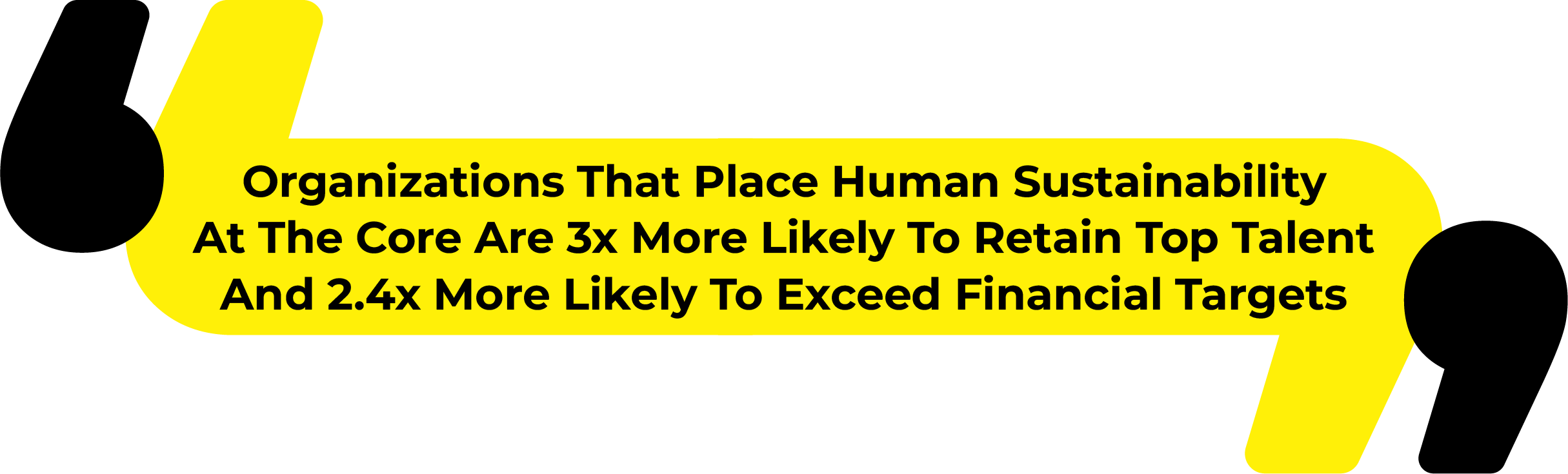
The regenerative mindset doesn’t treat social metrics as PR. It treats human flourishing as a core ROI. As Deloitte’s 2024 Human Capital Trends report states:
Regeneration Is Activism In Leadership Form
This era demands leaders who can heal fractured systems, not just scale them. Social regeneration means dismantling toxic norms and replacing them with psychologically safe, emotionally literate, and inclusively empowered environments. This is especially urgent as AI continues to redefine how people work.
Without intentional regenerative principles, automation risks dehumanization.
Regenerative Leaders serve as the ethical counterbalance, ensuring the tech
revolution doesn’t come at the cost of social erosion.
Social Sustainability As A Daily Practice
Infusing the “S” into leadership isn’t just about large-scale policies. It’s about everyday choices.
- How we conduct meetings.
- Who gets promoted.
- What flexibility we offer to parents and
caregivers. - How we treat feedback and failure.
- What behaviors we reward, even when no one’s watching
In this light, social sustainability becomes an act of leadership integrity. Not a corporate label, but a living ethos
Reflective Questions for the Regenerative Leader:
- How does my team experience fairness and dignity in their daily work?
- What biases might still exist in our leadership behaviors or systems?
- Where can I create more equity, not just equality, in my organization?
- Am I building an emotionally safe space or just an efficient one?
- What legacy am I leaving in the lives of those I lead?