Burnout has become one of the most common challenges facing organizations today. Leaders across industries are seeing the effects firsthand. Employees are feeling exhausted, managers are stretched thin, and teams are struggling to maintain the same level of energy and engagement they once had. While organizations continue to pursue ambitious goals and navigate constant change, many are finding that the pressure to perform is coming at a significant cost.
In response, organizations often invest in well-being initiatives, resilience workshops, and stress management programs. While these efforts can be valuable, they often focus on helping people cope with burnout rather than understanding why it occurs in the first place. As a result, many organizations find themselves treating the symptoms without addressing the underlying cause.
The Hidden Cost of Performance
Most organizations are designed to drive results. Performance targets, deadlines, key performance indicators, and growth objectives play an important role in helping organizations succeed. However, when performance becomes the primary focus, it is easy to overlook the resources that enable it.
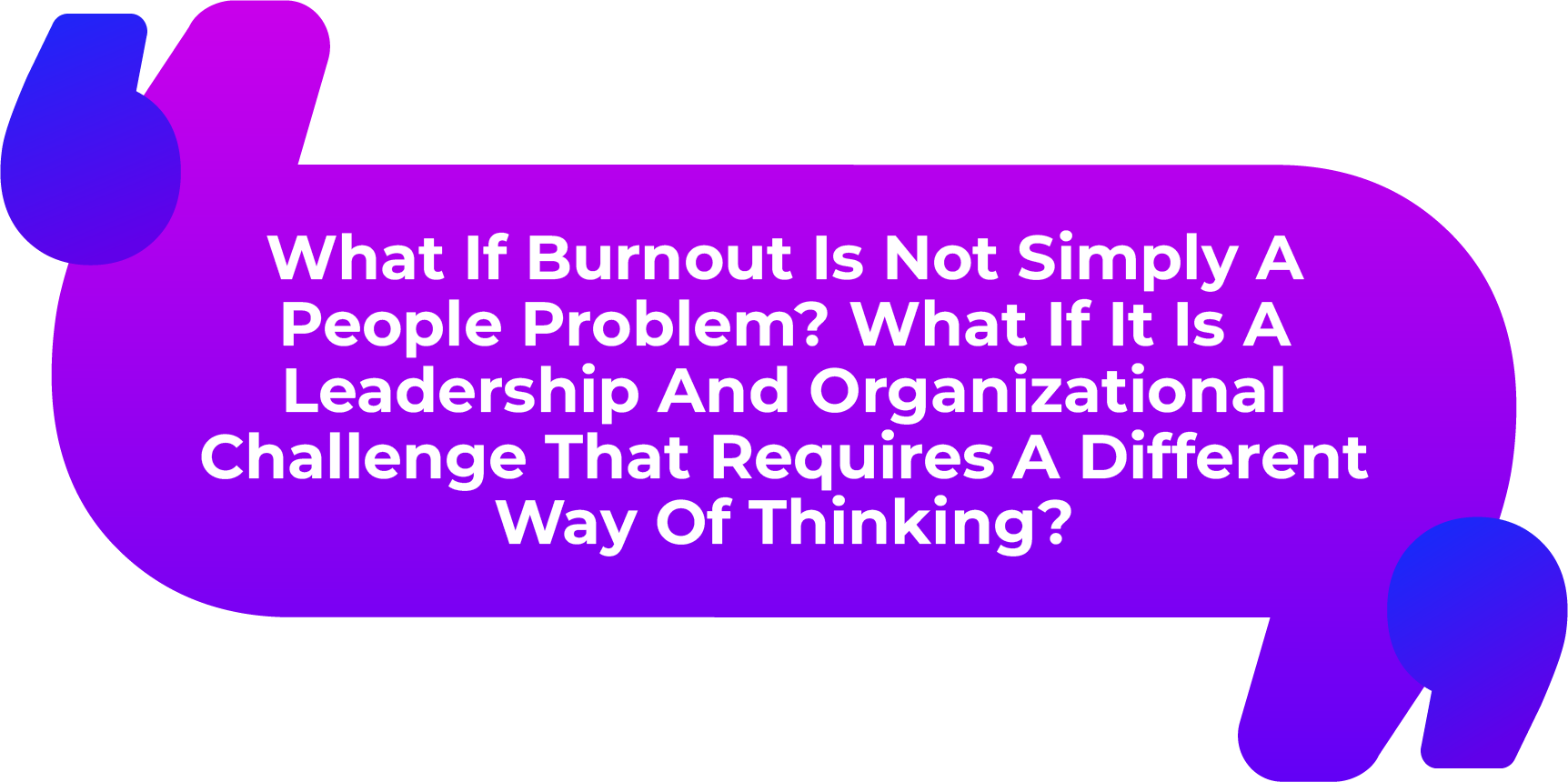
When this happens, organizations may optimize for short-term outcomes while unintentionally reducing stakeholder value, depleting the energy, trust, and commitment that make results sustainable.

Every organization depends on more than skills and systems. It depends on human energy, motivation, creativity, commitment, and trust. These are valuable resources, but they are not unlimited. When people are consistently expected to give more without opportunities to recover, reflect, or grow, those resources begin to decline.
Burnout rarely happens overnight. It often develops gradually as energy is consumed faster than it is renewed. Employees may continue to perform for some time, but the cost eventually becomes apparent. Enthusiasm decreases. Engagement drops. Creativity suffers. People begin doing what is necessary to get through the day rather than bringing their best to their work.
The challenge is not that people are unwilling to contribute. The challenge is that they are operating in environments that continuously draw from them without intentionally replenishing what has been depleted.
When Leadership Becomes Extraction
Most leaders do not intend to create burnout. In fact, many care deeply about their people and want them to succeed. However, traditional leadership approaches can sometimes create conditions where depletion becomes inevitable.
When leaders focus primarily on outcomes, they naturally spend more time discussing what needs to be delivered than what people need in order to sustain their performance. Conversations revolve around targets, deadlines, and execution. Reflection, renewal, and development often become secondary priorities that are postponed until there is more time.
Unfortunately, there is rarely more time.
Over time, organizations can unknowingly create cultures where people are constantly expected to produce, adapt, and deliver without sufficient opportunities to restore their energy. The result is a cycle of continuous extraction. Performance may continue in the short term, but the human capacity that supports that performance gradually weakens.
Burnout is often a sign that extraction has exceeded regeneration.
A Regenerative Leadership Perspective
This is where Regenerative Leadership offers a different perspective.
Rather than asking how people can become more resilient to increasing demands, Regenerative Leadership asks a different question: How can organizations create conditions where people can sustain their energy, growth, and contribution over time?
This shift changes the focus of leadership. Instead of viewing burnout solely as an individual challenge, leaders begin to examine the systems, expectations, and leadership behaviors that may be contributing to depletion.
Regenerative Leadership recognizes that sustainable performance requires sustainable people. It understands that energy is not something organizations can continuously consume without consequence. Just as organizations invest in maintaining physical assets, they must also invest in renewing the human capacity that drives success.
The goal is not to reduce performance expectations. The goal is to achieve performance in a way that strengthens people rather than exhausts them.
What Regeneration Looks Like
Regeneration begins when leaders intentionally create conditions that restore and strengthen people rather than simply demanding more from them.
This may involve creating space for reflection and learning instead of remaining in constant execution mode. It may mean developing people rather than solving every problem for them. It may involve building cultures where trust, ownership, and growth are seen as essential components of performance rather than separate priorities.
Regenerative leaders understand that long-term success depends on more than what people accomplish. It also depends on whether people are becoming stronger, more capable, and more energized through the work they do.
When organizations focus on regeneration, they are not choosing people over performance. They are recognizing that people make performance possible.
Why Regenerative Leadership Matters
The future of work will continue to place significant demands on organizations and leaders. The pressure to innovate, adapt, and perform is unlikely to disappear. In this environment, organizations that rely solely on extracting more effort from their people may find themselves facing increasing levels of burnout, disengagement, and turnover.
Organizations that thrive will be those that understand the importance of regeneration. They will recognize that sustainable success requires more than productivity. It requires leaders who intentionally renew the energy, capability, and commitment of the people they lead.
Regenerative Leadership matters because it challenges a mindset that has shaped organizations for decades. It reminds leaders that people are not infinite resources. When people are continuously depleted, performance eventually suffers. When people are intentionally regenerated, both people and performance can thrive together.
Reflection for Leaders
Burnout is often discussed as an individual issue, but it may be worth considering whether it is also an organizational signal.

As leaders reflect on their teams, they might ask themselves a few important questions. What is currently draining energy within the organization? What opportunities exist for renewal and growth? Are leadership practices helping people sustain their contribution, or are they unintentionally contributing to exhaustion?
The answers to these questions may reveal an important truth. Sustainable performance is not created by asking people to give more and more. It is created by building environments where people can continue growing, contributing, and thriving over the long term.
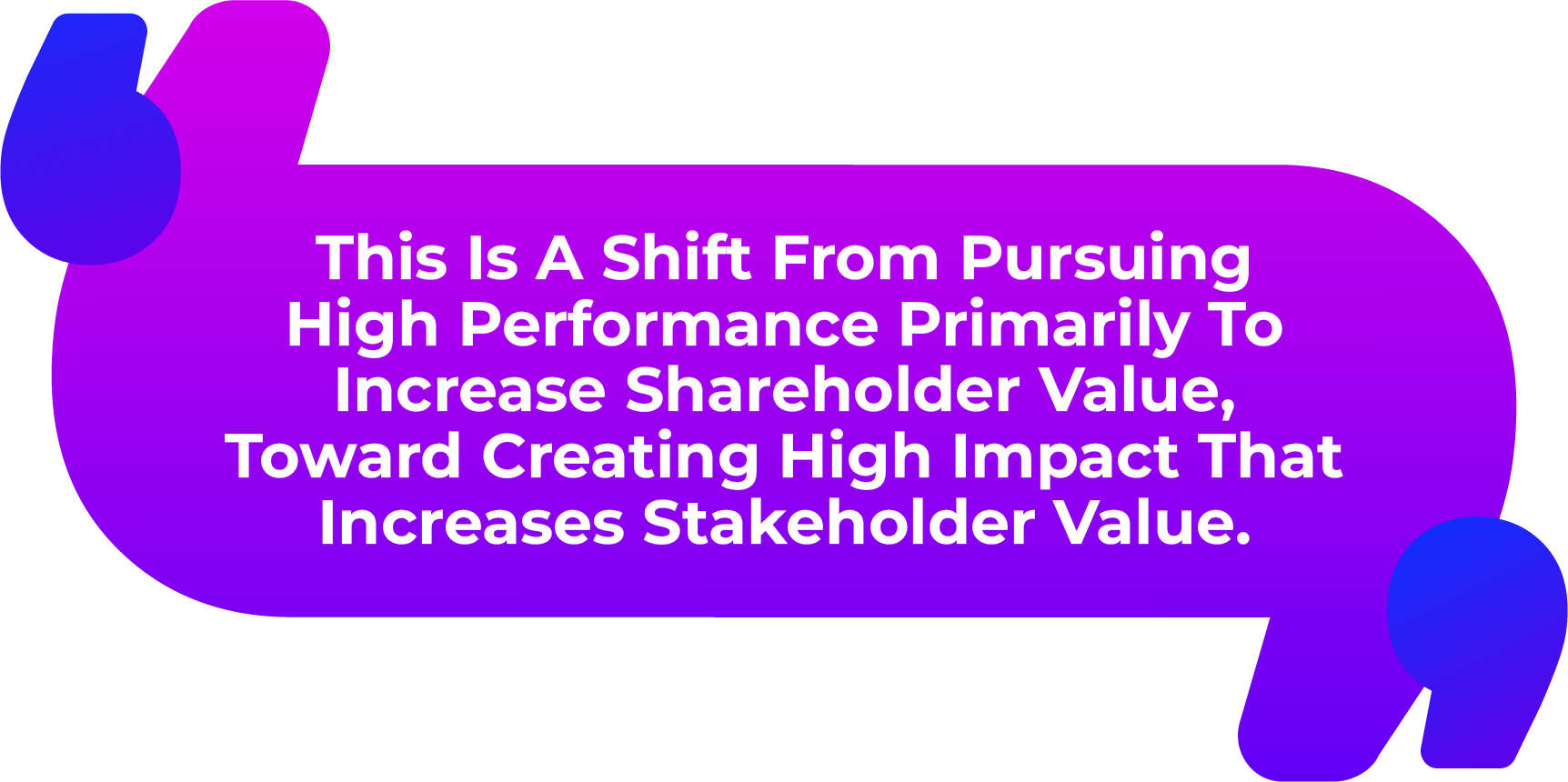
Sustainable stakeholder value is built the same way, through leadership practices that create lasting impact without depleting the people who make it possible.
That is why Regenerative Leadership matters.
Checklist: Pause & Notice: Regenerative Leadership Checklist
Rating guide: 5 = Highest (most true for you) 1 = Lowest (least true for you)
☐ I regularly discuss energy, well being, and capacity with my team, not just performance and results.
☐ I create opportunities for reflection, learning, and renewal instead of keeping people in constant execution mode.
☐ I focus on developing people and building capability rather than simply driving output.
☐ I actively look for signs of depletion, disengagement, or burnout within my team and organization.
☐ I make leadership decisions that strengthen people, trust, and long term stakeholder value, not just short term performance.