
Every leader has experienced it.
A meeting begins with a challenge, and within minutes the conversation becomes consumed by everything that is not working. Team members discuss obstacles, revisit past mistakes, and debate the reasons behind the problem. By the end of the discussion, everyone understands the issue in greater detail, yet little progress has been made toward a solution.
This pattern is common in organizations. When challenges arise, the natural instinct is to focus on the problem. Leaders want to understand what happened, why it happened, and who or what contributed to it. While there is value in understanding problems, many organizations unknowingly spend so much time analyzing challenges that they leave little energy for solution building.
The result is a workplace where people become highly skilled at discussing problems but less effective at moving toward what they want instead.
The Limits of a Problem Focused Approach
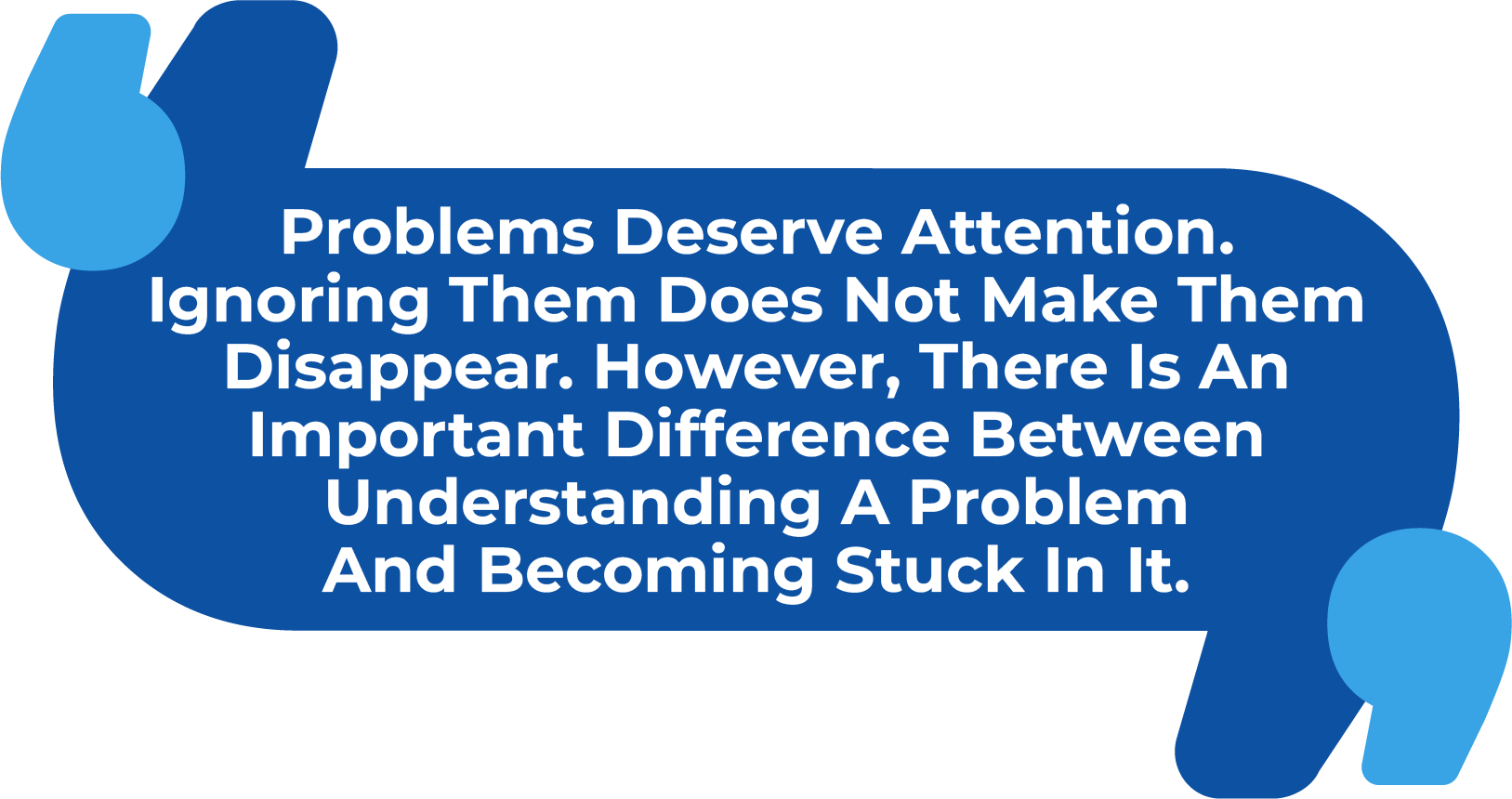
When conversations revolve primarily around what is wrong, people often begin to focus on limitations rather than possibilities. Discussions become centered on obstacles, constraints, and past failures. Energy is directed toward explaining why something cannot happen rather than exploring how it might.
Over time, this way of thinking can create unintended consequences. Teams become cautious. Innovation slows. Ownership decreases. People begin waiting for someone else to provide the answer because the conversation has been framed around the problem rather than the possibility of progress.
The challenge is not that leaders care too much about problems. The challenge is that problems often consume attention that could be used to create solutions.
A Different Way of Thinking

The Solution Focused Mindset offers an alternative approach.
Rather than beginning with what is wrong, it starts by exploring what is possible. Instead of asking, “Why is this
happening?” leaders are encouraged to ask, “What past success can you draw upon to help you now?” This shift may appear simple, but it fundamentally changes the direction of a conversation.
When people are invited to think about their preferred future, they begin paying attention to opportunities rather than limitations. They begin identifying strengths, resources, and actions to move them forward. The conversation shifts from understanding the problem to creating progress.
This does not mean ignoring challenges or pretending difficulties do not exist. Rather, it means recognizing that understanding a problem is only useful if it helps people move toward a better outcome.
Why Solutions Create Momentum
One of the most powerful aspects of a solution focused mindset is its ability to create momentum.
People often feel energized when they can see progress. Even small improvements can increase confidence, encourage action, and generate hope. When leaders help teams identify what is already working, what strengths they possess, and what next steps they can take, people become more engaged in shaping the future.
Consider the difference between these two questions:
“What is causing the delay?”
“What would help us move this project forward?”
Both questions relate to the same challenge, but they direct attention in very different ways. One focuses on analysing the problem. The other focuses on the solution moving forward.
While there may be times when problem analysis is necessary, organizations cannot innovate their way into the future by remaining focused on what is wrong. Progress requires the ability to imagine and create what is possible.
What Solution Focused Leaders Do Differently
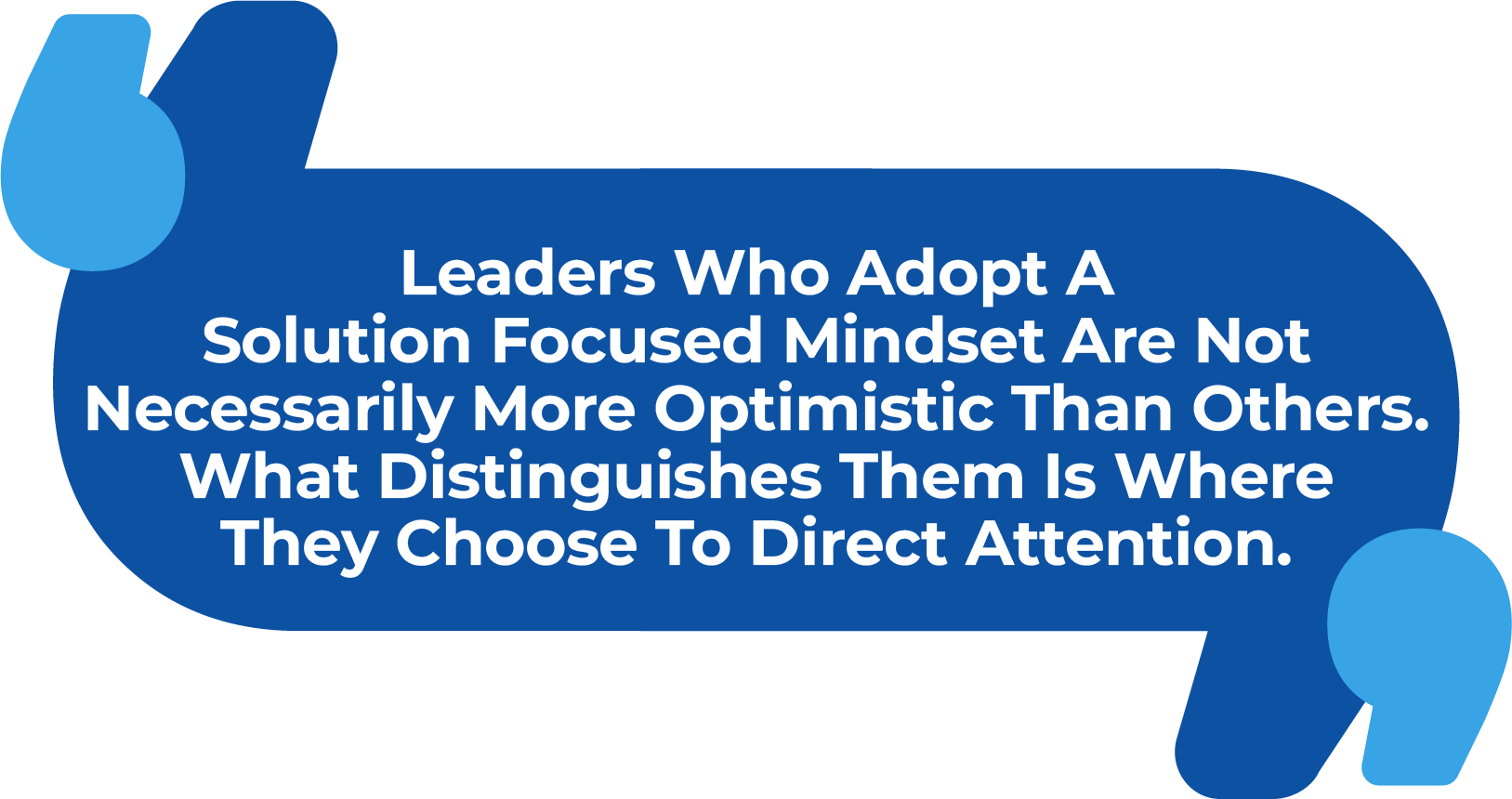
They look for strengths before weaknesses.
They search for progress before perfection.
They explore possibilities before limitations.
They ask questions that encourage people to think, contribute, and create.
Most importantly, they help others recognize that solutions often begin with resources that already exist.
A solution focused leader understands that people are more likely to move forward when they can see evidence of capability, progress, and possibility.
Building a Solution Focused Culture

Culture is shaped by the conversations that happen every day.
If conversations consistently focus on blame, mistakes, and limitations, people learn to approach challenges from a deficit perspective. If conversations focus on strengths, progress, and possibilities, people learn to approach challenges with greater confidence and creativity.
This does not mean organizations should avoid difficult conversations. It means difficult conversations should ultimately lead somewhere productive.
The goal is not to become less aware of problems.
The goal is to become more capable of creating solutions.
When leaders consistently ask questions that uncover strengths, highlight progress, and encourage action, they help create a culture where people feel empowered to move forward rather than trapped by what is holding them back.
Reflection for Leaders
Every leadership conversation shapes what people pay attention to.
As you reflect on your own leadership, consider the questions you ask most often.
Are they helping people understand problems more deeply, or are they helping people create solutions?
Are your conversations generating energy and momentum, or are they reinforcing limitations and obstacles?
The solution focused mindset begins with a simple belief, which is people are more likely to move toward a better future when they spend more time building it than analyzing why it does not yet exist.
Sometimes the most powerful leadership shift is not changing the problem.
It is changing the conversation.
Pause & Notice: Reflection for Solution Focused Leaders
Rating guide: 5 = Highest (most true for you) 1 = Lowest (least true for you)
☐ Are my leadership conversations helping people build solutions or revisit problems?
☐ Do I regularly help my team identify what is already working and how to build on it?
☐ Am I directing attention toward possibilities, strengths, and desired outcomes?
☐ Do my questions generate energy and forward movement, or do they reinforce limitations?
☐ What is one conversation I can shift this week from problem solving to solution building?