Understanding the Leadership Challenge
Artificial Intelligence is transforming organizations at an extraordinary pace. From automating routine work to generating insights that improve decision making, technology is reshaping how leaders manage operations, develop strategy, and respond to an increasingly complex business environment. Organizations that successfully embrace these advancements will undoubtedly become faster, more efficient, and more productive.
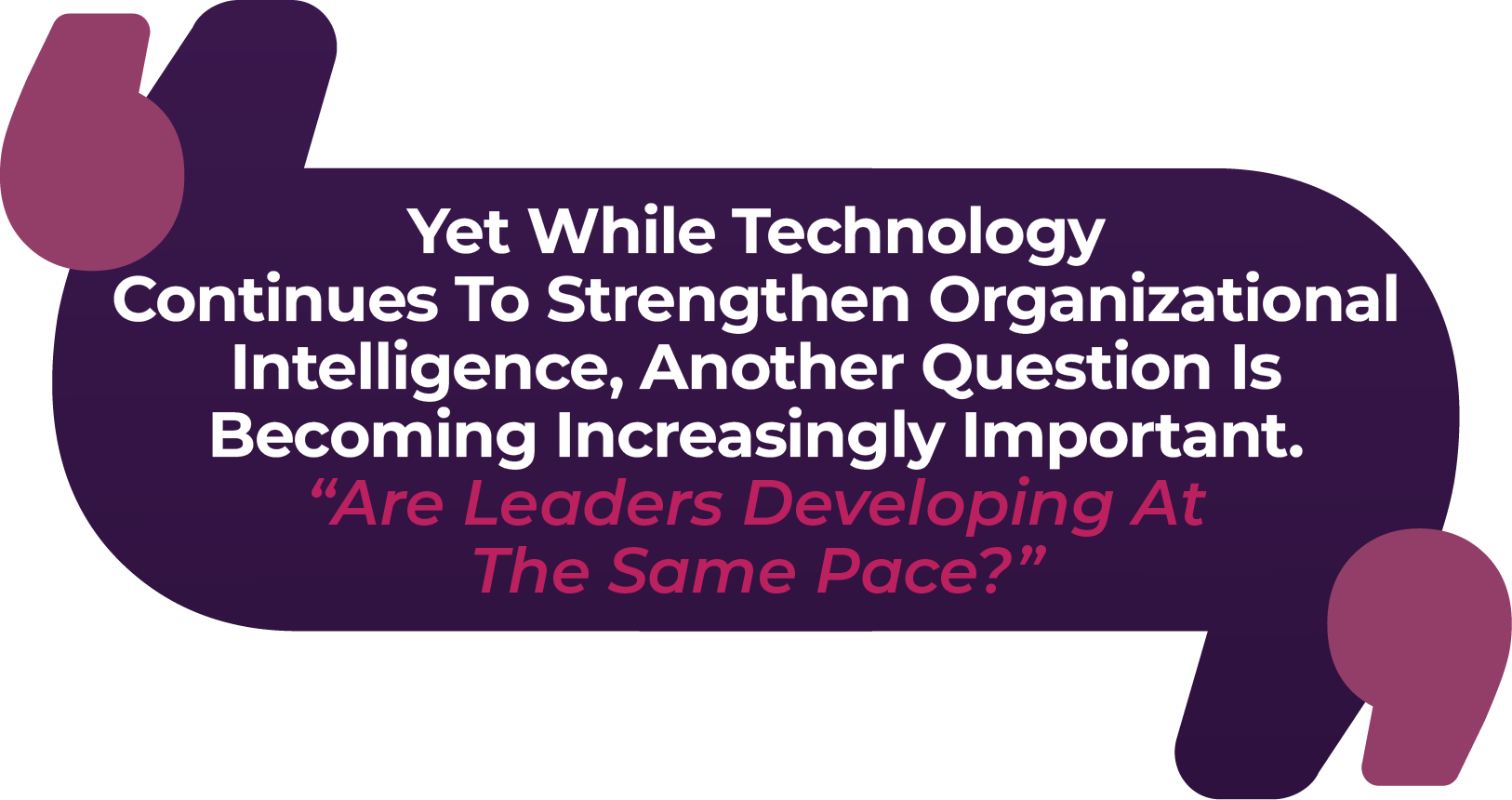
Many organizations have invested heavily in improving systems, processes, and cognitive capability. Leaders have access to more information than ever before, yet many still struggle with declining trust, disengaged teams, increasing burnout, and decisions that appear logical but fail to gain genuine commitment.
The challenge is not a lack of intelligence.
It is the growing gap between technological capability and human capability.
As Artificial Intelligence continues expanding what organizations can do, leadership must expand its ability to understand people, interpret complex human situations, and create environments where individuals continue to grow, contribute, and adapt together.
The future of leadership therefore requires more than thinking better.
It requires leading people better.
The Heartstorm Perspective
Heartstorm begins with a simple observation.
The world has become exceptionally good at developing cognitive capability.
Organizations teach leaders how to analyse data, solve problems, build strategies, improve efficiency, and make better decisions; all these from being better at cognitive reasoning. These capabilities remain essential because organizations cannot succeed without sound thinking. However, thinking alone has never been enough to lead people well.
Leadership is not experienced through strategy.
Leadership is experienced through human interaction.
Every decision influences confidence.
Every conversation shapes trust.
Every response communicates value.
Every meeting leaves people either more encouraged or more depleted than before.
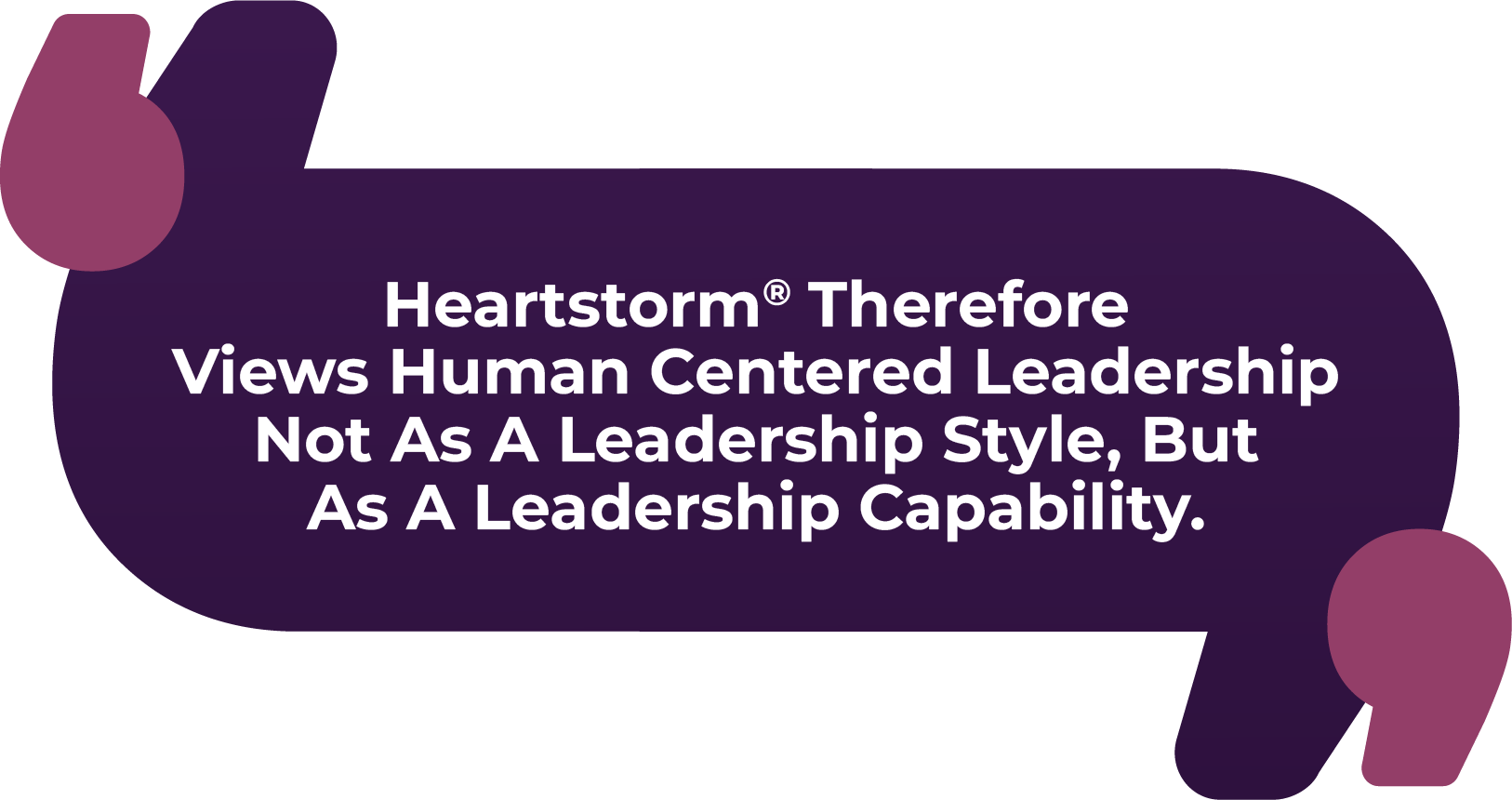
It is the discipline of intentionally creating the human conditions that allow individuals, teams, and organizations to flourish together.
This represents an important shift in leadership thinking.
Traditional leadership often asks,
How do I improve results?
Heartstorm begins by asking,
What do people need to feel to do their best work?
The difference is significant.
Results are outcomes.
Capability is what produces those outcomes repeatedly.

When leaders invest only in systems, processes, and targets, they may achieve short-term success while unintentionally weakening the very capability that sustains future growth. When leaders intentionally strengthen trust, encourage meaningful dialogue, develop confidence, and create psychological safety, they strengthen the human capability that allows organizations to innovate, collaborate, and adapt over time.
Human Centered Leadership is not only about the mindset change, it’s about the HEARTSET change.
It recognises that every interaction either strengthens or weakens the capability of the people involved. A difficult conversation can build confidence or diminish it. A team meeting can encourage contribution or create silence. A leadership decision can strengthen commitment or quietly reduce ownership.
Heartstorm encourages leaders to become conscious of these moments because culture is rarely transformed through major initiatives.
Culture is shaped through everyday leadership experiences.
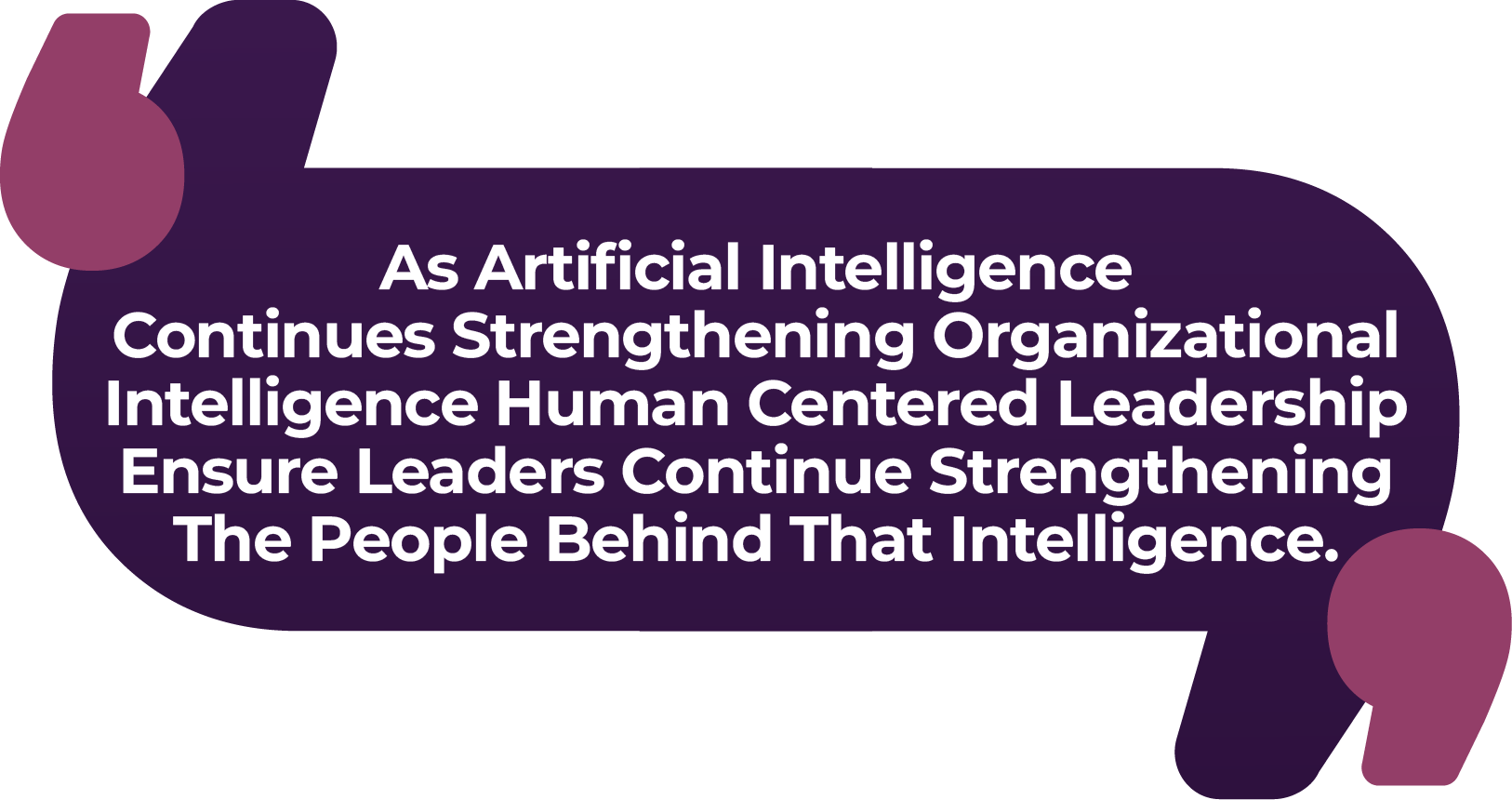
Technology may become smarter.
Leadership must become wiser.
The organizations that flourish in the future will not simply be those with the most advanced technology.
They will be those with leaders who intentionally develop human capability alongside technological capability.
Leadership in Practice
Understanding Human Centered Leadership is only the beginning. Its true value is realised through everyday leadership practice. Every conversation, meeting, coaching session, and decision either strengthens or weakens the human capability within an organization. While these moments may appear ordinary, they collectively shape how people experience leadership and, ultimately, the culture of the organization.
Consider a leader introducing a new Artificial Intelligence platform to the team. The technical implementation may be well planned, the timelines clearly communicated, and the expected outcomes carefully explained. From a project management perspective, everything appears to be under control. Yet some team members remain hesitant, uncertain, or resistant to the change.

A leader who focuses only on the implementation may respond by reinforcing deadlines, providing more information, or increasing accountability. A Human Centered Leader recognises that successful change is not determined only by how well technology is implemented, but also by how well people are supported throughout the transition. The conversation therefore extends beyond systems and processes to include questions, concerns, aspirations, and the confidence people need to move forward together.
The same principle applies during performance conversations. While goals, expectations, and results remain important, Human Centered Leadership encourages leaders to understand the person behind the performance. Instead of viewing feedback as a one way evaluation, it becomes an opportunity to develop confidence, strengthen capability, and encourage continued growth. Accountability is maintained, but it is balanced with genuine interest in helping people succeed.
These examples illustrate an important leadership truth. Technology may improve how organizations work, but it cannot improve how people experience leadership. That responsibility remains with leaders.
Every interaction therefore becomes an opportunity to strengthen trust, encourage contribution, and develop the human capability that enables organizations to thrive in an increasingly complex world.
Closing Insight
Artificial Intelligence will continue transforming the workplace. Organizations will become more efficient, more connected, and increasingly intelligent through technology. Yet the greatest challenge facing leaders is unlikely to be technological.
It will be us, humans.
As organizations strengthen their cognitive capability, leaders must become equally committed to strengthening human capability. This is the essence of Human Centered Leadership. It reminds us that sustainable success is created not only through better systems and smarter technology, but also through leaders who intentionally develop the people behind them.
The future will not simply belong to organizations that adopt Artificial Intelligence.
It will belong to organizations whose leaders never lose sight of what makes people flourish.
Pause and Notice
Reflect on your current leadership practice by rating each statement.
Highest (most true for you) 1 = Lowest (least true for you)
☐ I intentionally create opportunities for meaningful conversations with my team.
☐ I consider how people experience my leadership, not just the results we achieve.
☐ I create an environment where people feel safe to contribute ideas and learn from mistakes.
☐ I intentionally strengthen trust and confidence through my everyday interactions.
☐ I balance organizational outcomes with the growth and development of my people.