Why Great Leaders Listen More Than They Speak
Listening Is Where Leadership Begins
Leadership is often associated with communication.
Leaders present strategies, share vision, provide direction, and inspire action through what they say. Their ability to communicate clearly remains an essential part of effective leadership because it helps people understand where the organization is heading and how they can contribute to its success.
Yet leadership is shaped by more than the messages leaders deliver.
It is also shaped by how well they understand the people they lead.
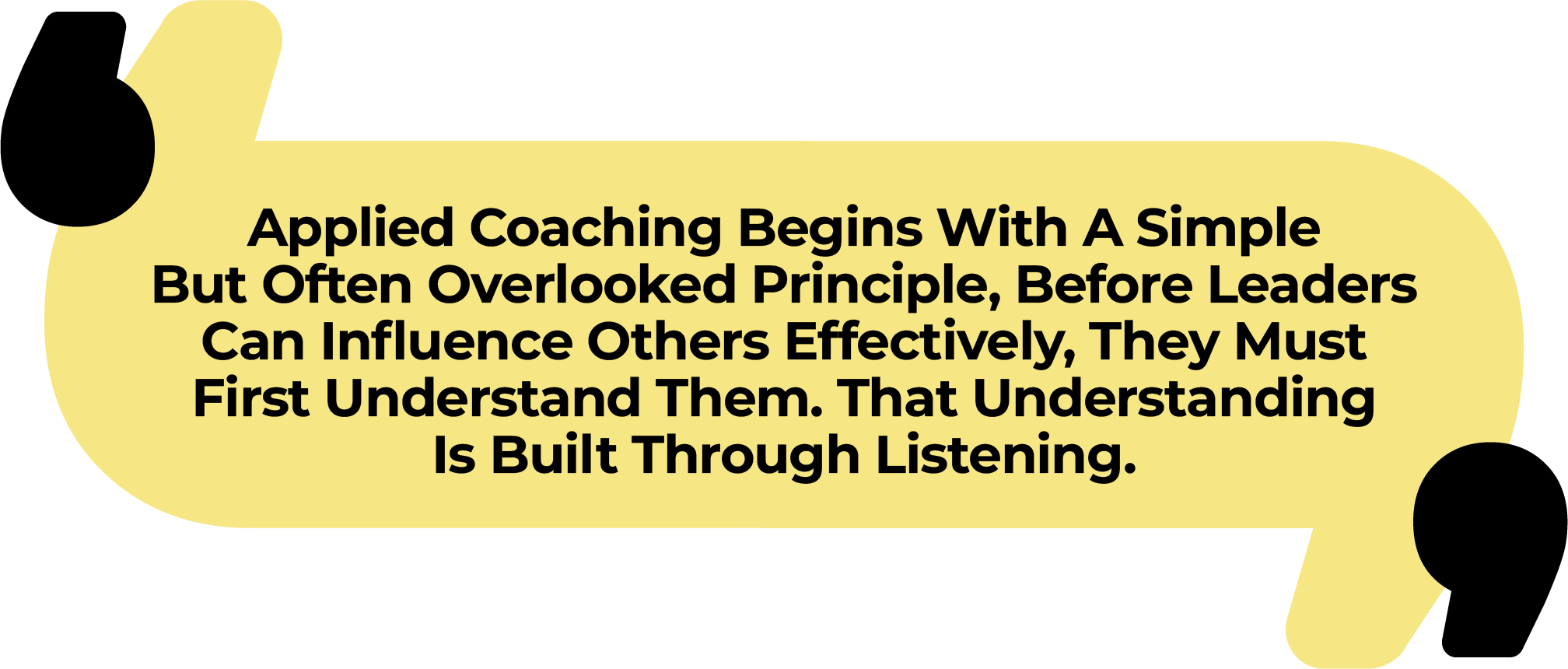
Listening is not a pause between speaking. It is an intentional leadership practice that creates trust, strengthens relationships, and opens the door for meaningful coaching conversations.
Great leaders recognize that people are far more likely to engage when they feel understood before they are directed.
Listening Creates the Conditions for Trust
Trust is not built through authority alone.
It grows when people believe they are respected, valued, and genuinely heard.
Many workplace conversations move quickly toward solutions. Leaders naturally want to help, so they offer advice, share their experiences, or provide immediate direction. While these responses are often well intentioned, they can unintentionally communicate that solving the problem is more important than understanding the person experiencing it.
Applied Coaching takes a different approach.
Engaged listening allows leaders to slow down, explore perspectives, and understand not only what people are saying, but also what they are thinking, feeling, and experiencing. This deeper level of understanding strengthens trust because people feel that their experiences matter, not just the outcomes they are expected to deliver.
When trust grows, conversations become more honest, collaboration becomes easier, and people are more willing to contribute their ideas.
Listening becomes the foundation upon which effective leadership relationships are built.
Listening Develops Thinking, Not Dependence
Many leaders believe their responsibility is to provide answers.
While expertise certainly has its place, constantly supplying solutions can unintentionally create dependence. Team members begin looking to the leader for direction rather than developing the confidence to think through challenges themselves.
Applied Coaching shifts the leader’s role from providing immediate answers to developing independent thinkers.
Listening plays a critical role in this process.
When leaders listen attentively before responding, they gain a deeper understanding of how people are approaching a situation. This creates opportunities to ask thoughtful questions that encourage reflection, expand perspectives, and strengthen decision making.
Rather than solving every problem, leaders help people develop the capability to solve future problems themselves.
Listening is not passive.
It is an active investment in developing people’s thinking.
Listening Strengthens Psychological Safety
People contribute their best ideas when they believe they can speak openly without fear of embarrassment, judgment, or dismissal. This sense of psychological safety cannot be created through policies or organizational values alone.
It is created through everyday leadership interactions.
When leaders interrupt frequently, dismiss concerns too quickly, or appear distracted during conversations, people naturally become more cautious about sharing ideas or raising difficult issues.
Conversely, when leaders listen with genuine curiosity and remain fully present, they communicate that every perspective deserves consideration.
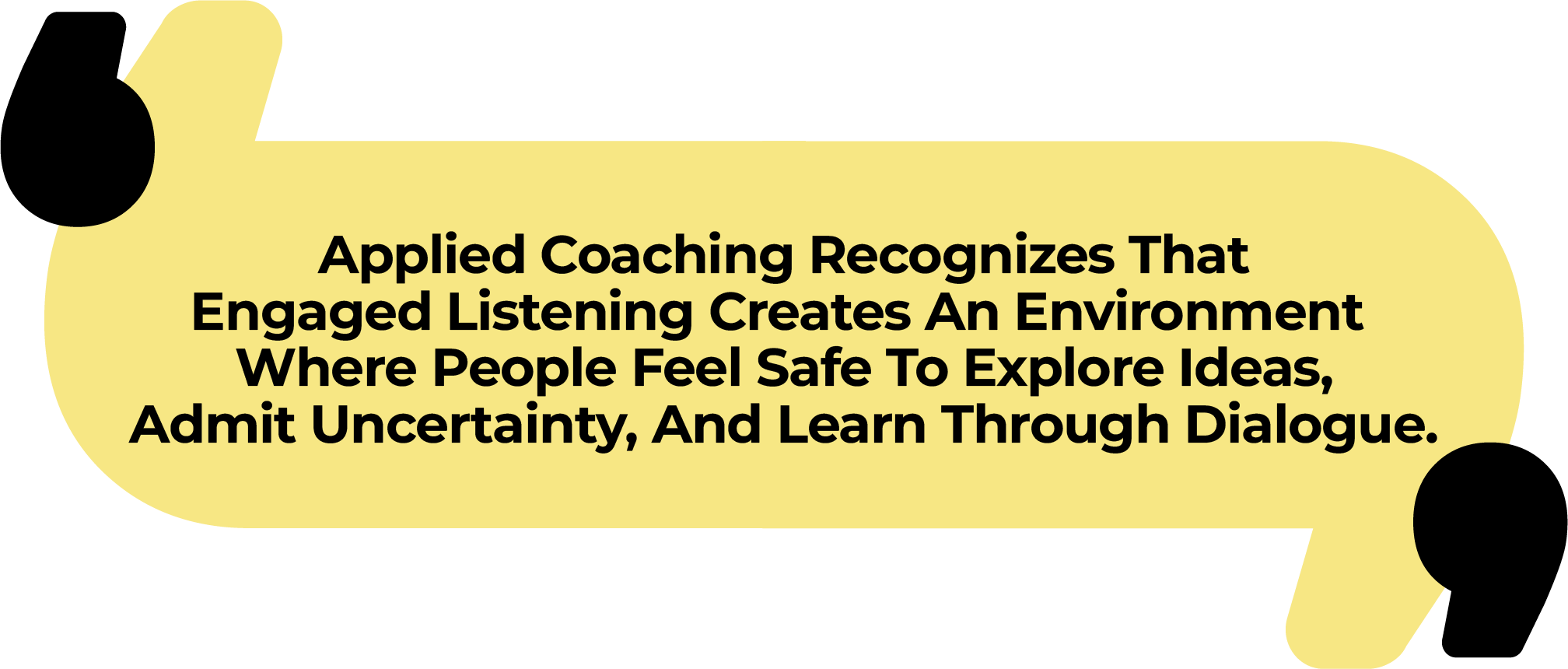
Applied Coaching recognizes that engaged listening creates an environment where people feel safe to explore ideas, admit uncertainty, and learn through dialogue.
Innovation, collaboration, and continuous improvement flourish in environments where people know their voices matter.
Listening Multiplies Leadership Influence
Many leaders assume influence comes from speaking persuasively.
In reality, influence often begins with understanding.

People are more receptive to guidance when they believe their leader has taken the time to understand their perspectives, challenges, and aspirations. Advice becomes more relevant because it is grounded in genuine understanding rather than assumption.
Listening also helps leaders recognize strengths, uncover potential, and identify opportunities for growth that might otherwise remain hidden.
Applied Coaching views listening as one of the most powerful ways leaders expand their influence because it transforms leadership from directing people to partnering with them.
The conversations become richer.
The relationships become stronger.
The outcomes become more sustainable.
A Different Leadership Question
Traditional leadership often asks,
“How can I communicate my message more effectively?”
Applied Coaching begins with a different question.
“How well am I understanding the people before I seek to influence them?”
This subtle shift changes the purpose of leadership conversations.
Communication is no longer focused solely on delivering information.

It becomes an opportunity to build trust, develop thinking, and strengthen relationships through intentional listening.
Pause and Notice
Highest (most true for you) 1 = Lowest (least true for you)
Before your next conversation, pause and notice:
- How much of the conversation is spent listening versus speaking?
- Am I listening to understand, or listening to respond?
- What might I discover if I asked one more question before offering advice?
- Do people leave conversations with me feeling heard and understood?
- How might deeper listening strengthen trust, thinking, and ownership within my team?
Transformation begins with awareness.
Great coaching begins with listening.
Conclusion
Leadership has long been associated with the ability to communicate with clarity and confidence.
While these qualities remain important, Applied Coaching reminds us that the most influential leaders are often the ones who listen most intentionally.
Listening is more than a communication skill.
It is a leadership practice that builds trust, strengthens psychological safety, and develops people’s ability to think, contribute, and grow.
When leaders create space for others to be heard before they seek to be heard themselves, conversations become more meaningful, relationships become stronger, and coaching becomes part of everyday leadership.
Great leaders do not listen because they have less to say.
They listen because they understand that lasting leadership begins with understanding people before influencing them.